Les Bleus’ Brand-Building at FIFA World Cup 2026
France are having a good tournament and have captivated the world’s attention. But regardless of who wins today’s semifinal against Spain, Les Bleus have already won their “American summer” by building a brand that’s leaving a mark on the American cultural landscape.
The country is more often associated within U.S. culture as one of fashion, food, and romance, as captured in the wildly popular (although contentious in France) “Emily in Paris.” But this summer, football is taking its place as part of what many Americans think about when they think of France.
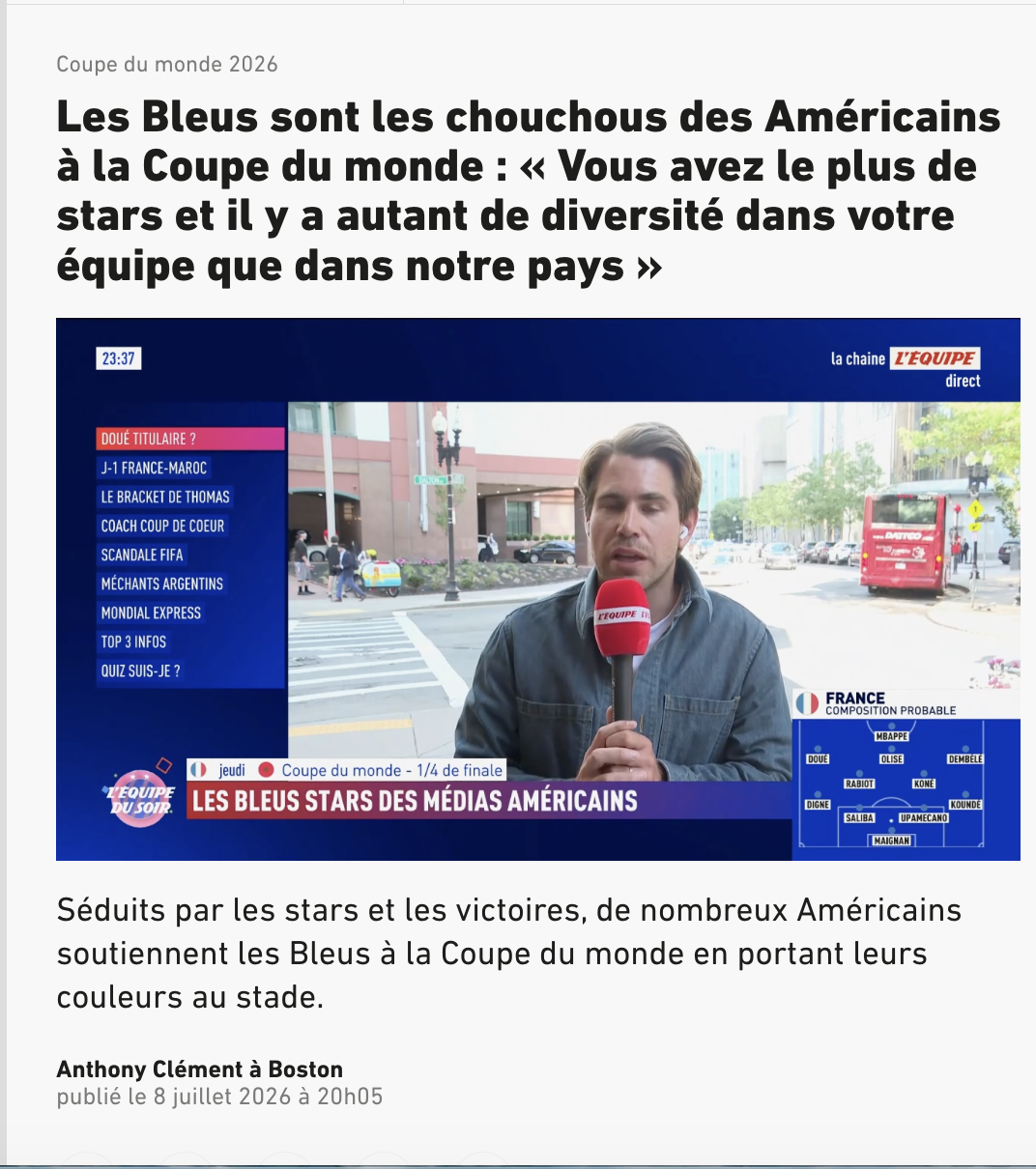
Les Bleus’ on-pitch performances continue to dazzle as they step ever-closer to their ultimate goal of winning a third star. It is the last World Cup for manager Didier Deschamps, who after July 19 will step down from a post he’s held since 2012. And his squad seem bent on netting him one last trophy before Deschamps’ former teammate, legend Zinédine Zidane, takes the reins and opens a new chapter for the national team.
The nature of how they win is important. France have conceded just two goals thus far and, thanks to a solid defense and midline, Les Bleus’ attack is free to create and score. That’s put a spotlight on its roster, stocked with some of the world’s best players, including captain and Golden Boot frontrunner Kylian Mbappé, Ballon d’Or winner Ousmane Dembelé, Michael Olise, and Désiré Doué among others, is attractive to a U.S. market that adores stars.
The French team illustrate a certain type of elegance in how they play and win, as well as how to “do” football more broadly. For example, ever-greater attention is paid by American media to the French football development system, one that’s produced 99 players on World Cup rosters.
Off the pitch, the team and players are having a moment with a growing American public, too. What began with a U.S.-themed sitcom introduction video in May has blossomed. Les Bleus are living well together at their basecamp in Boston’s Four Seasons hotel, alongside their new 96-year-old neighbor Shirley, and built a home-away-from-home with the Boston-area community.
It helps that this generation of Les Bleus are seemingly more at ease with engaging and communicating with their various publics. Gone are the days when the typical footballer was known for “langue du bois” (wooden tongue), a reference to how they rarely said much of consequence during required media availability. Instead, these Bleus are comfortable taking the microphone.
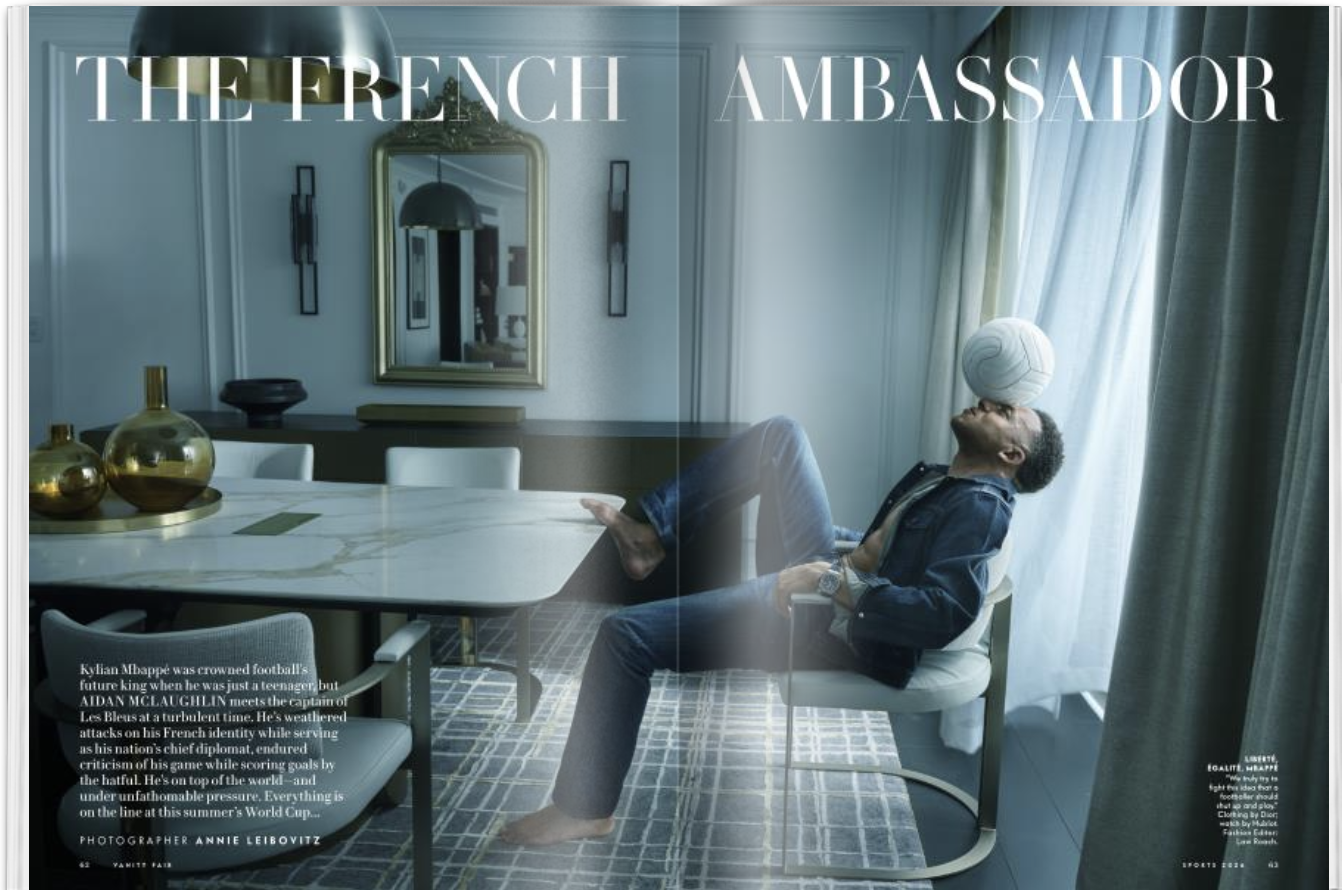
And Mbappé leads the way. From his June Vanity Fair cover story, in which “The French Ambassador” discussed at length why he’s outspoken against the country’s resurgent far-right-wing, to his willingness to stand up to racism, Mbappé sets the tone. When Paraguayan senator Celeste Amarilla attacked the Frenchman in a series of violently racist posts on X and in the Senate, Mbappé responded with an intelligent, impactful response.
Then there is the appeal of France’s symbolic away kit this summer. The NIKE design is a departure from the country’s eponymous bleu-blanc-rouge kit that represents the tricolor flag. Instead, the light green with bronze details symbolizes the Statue of Liberty that was gifted by France to the American people to mark the U.S. centennial.
It’s a fitting reminder from the United States’s oldest ally during the 250th anniversary celebrations, one that Les Bleus have capitalized on given the more than 100 years of Franco-American football relations.
That’s because, despite the tournament having three co-hosts, the French have played only within the United States (and, with today’s semifinal in Dallas, all within the Northeast).
This is all good for the French Football Federation (FFF) objective of becoming a global brand on the same levels as Real Madrid.