A Historical Lesson for Building Back U.S. Diplomacy
The incoming Biden-Harris Administration has an unenviable slate of foreign policy issues it must tackle but one of the most critical is to reinvest in U.S. diplomacy and the diplomatic corps.
There are many reasons why such investment is required. As the Senate Foreign Relations Committee’s minority staff’s July 2020 report “Diplomacy in Crisis: The Trump Administration’s Decimation of the State Department” highlighted, the morale of the U.S. Department of State is in tatters. A prolonged hiring freeze, crippling loss of institutional memory and the exodus of expertise across all bureaus, lackluster handling of diversity and inclusion, marginalization of diplomacy and much more have contributed to the sense of calamity.
But the moment requires optimism, for great eras of diplomatic crisis historically result in modernization and professionalization of U.S. diplomacy, reengineering it to better function and thrive in new eras.
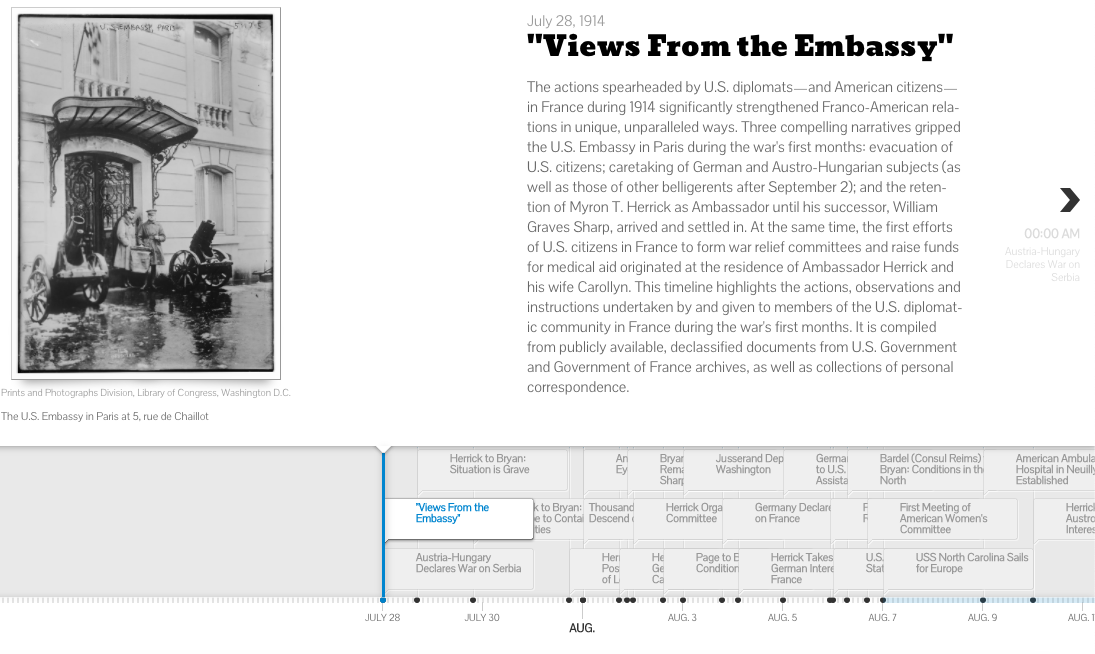
Take the watershed example of the First World War era. When war broke out in August 1914, there was no Foreign Service as we know it today. Instead, the conduct of diplomacy was in the hands of a small coterie of Diplomatic Service and Consular Service officials. In Europe, the skeletal diplomatic corps that staffed U.S. Embassies were overwhelmed by the sudden, exponential growth in their duties and responsibilities as the Continent quickly descended into all-out war.
The U.S. Ambassador to France, Myron T. Herrick, rallied to the cause and responded to the multiplying crises at hand. Importantly, Herrick and the U.S. diplomatic and consular officials in France were aided significantly by their wives, sisters, daughters, mothers-in-law, and other female and male volunteers. Mildred Barnes Bliss, the wife of Embassy Secretary Robert Woods Bills, played a critical role in 1914—as well as throughout the war. The U.S. Consul in St Étienne, William H. Hunt, the rare African American in the Consular Service posted to Europe, used sport to reach out and engage with local French citizens in his consular district in what today we would call sports diplomacy.
These individual stories illustrate the “all hands on deck” attitude that helped forge U.S. diplomacy and representation in France into Great Power status. And it was replicated organically by U.S. representatives, their families, and the wider American expatriate community in other war-torn countries.
The crises that confronted U.S. diplomacy and the diplomatic corps underscored the need to re-engineer approaches and considerations. The resultant modernization, which began during the war, built momentum and led to the 1924 Rogers Act, which established the scope of today’s professionalized Foreign Service.
Today, it’s clear that a revitalization of U.S. diplomacy is required. And of course, part of building a strong 21st century diplomatic corps is to have a twenty-first century tools readily at hand. As I’ve argued elsewhere, a refreshed sports diplomacy policy approach can help facilitate the conduct of diplomacy, helping to capture a few wins, while also helping to improve morale.
As we pause this Armistice Day to remember the sacrifices of those who preceded us, it’s also a time to feel hopeful of this point to build back better, just as was done a century ago.